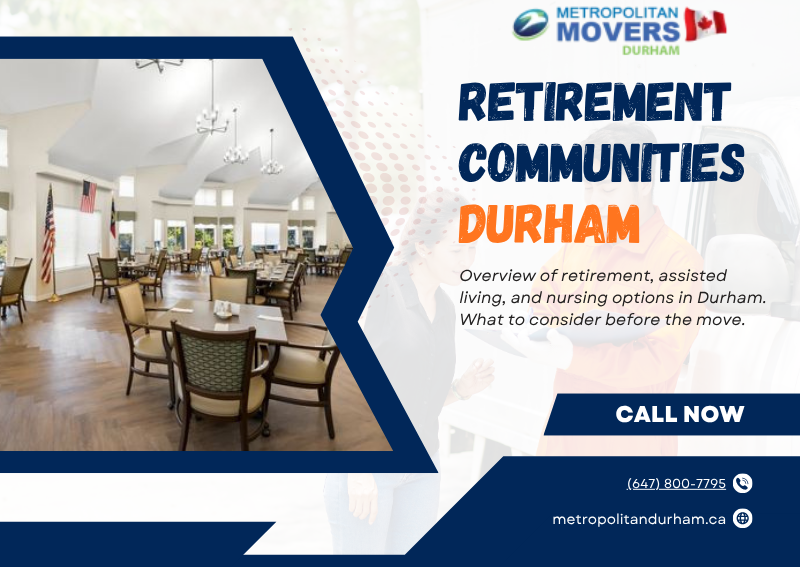
Choosing a retirement community for a loved one is one of the most important decisions a family can make. With several options in Durham Region – from Ajax and Pickering to Whitby, Oshawa, and Clarington – it can feel overwhelming to compare levels of care, amenities, and costs. You want safety, dignity, and a genuine sense of home, not just a room.
This guide is designed to help you understand the types of retirement communities available, what to look for during visits, and how to prepare for the move once you’ve made a choice. Understanding retirement communities Durham options is the first step toward a successful transition.
Metropolitan Movers has worked with most of the retirement residences in Durham Region over the past eight years. While we don’t endorse specific facilities, we can share general insights from real moving experience to help you ask the right questions and avoid common pitfalls.
To know more about Retirement community visit our guide
Types of Retirement Communities – Finding the Right Fit
Retirement living is not one‑size‑fits‑all. The term “retirement community” can mean very different things depending on the level of care and independence. Here are the main categories you’ll encounter across Durham Region.
Independent living – This is for seniors who can manage daily tasks on their own – bathing, dressing, cooking, medications – but want the convenience of meals, housekeeping, and social activities. No medical care is provided on site, though some communities have partnerships with home care agencies. Think of it as apartment living with perks and community.
Assisted living – For seniors who need help with activities of daily living, such as bathing, dressing, grooming, or medication management. Staff are available 24/7, meals are usually included, and there’s a focus on maintaining as much independence as possible while offering a safety net.
Memory care – These are specialized, secure communities for those with Alzheimer’s disease or other forms of dementia. Staff receive extra training in communication and behavior management, and the environment is designed to reduce confusion and wandering.
Skilled nursing (long‑term care) – For seniors with significant medical needs who require 24‑hour nursing care. These facilities are regulated by the province of Ontario and often have long waitlists. They are appropriate when someone can no longer be safely cared for at home or in assisted living.
Continuing care retirement communities (CCRCs) – Large campuses that offer a full range of care levels – from independent living to skilled nursing – on one property. Residents can “age in place” without moving to a different facility when their health needs change. Durham senior living communities each meet different needs – know the options before you start touring.
What to Look for During a Visit
When touring a retirement community, don’t just rely on the brochure or the sales pitch. Go with a checklist and trust your senses. Here’s what we’ve learned from helping families move into dozens of Durham retirement homes over the years.
First, pay attention to cleanliness and smell. Are common areas like hallways, dining rooms, and lounges genuinely clean? Any unpleasant odors, especially urine or stale food, can be a red flag. Second, watch staff interaction. Do employees greet residents warmly by name? Do they seem patient and attentive, or rushed and dismissive? Third, look for safety features: grab bars in bathrooms, emergency call cords or pendants, well‑lit hallways, and non‑slip flooring.
Fourth, check the activities calendar. Is there a posted schedule? Do activities match your loved one’s interests – things like card games, gentle exercise, music, or outings? Fifth, try to sample a meal. Ask if you can eat lunch in the dining room. Is the food appetizing? Are dietary needs like low‑sodium or diabetic meals accommodated? Sixth, ask about transportation. Is there a shuttle for medical appointments and grocery shopping? What’s the schedule?
Seventh – and this is crucial – understand the cost breakdown. What’s included in the monthly fee? What costs extra? Finally, visit at different times of day: once in the morning, once during mealtime, and once in the evening. A place that looks great at 10 AM might feel very different at 6 PM.
Cost Considerations and Payment Options
Let’s talk numbers. Retirement community costs in Durham Region can range from roughly $2,000 per month for basic independent living to $8,000 or more for memory care or skilled nursing. The price depends heavily on location, level of care, and the facility’s amenities. But don’t just look at the monthly fee – ask detailed questions.
What’s included in that base monthly fee? Rent, utilities, meals, housekeeping, laundry, and activities are often covered, but not always. Are there extra charges for things like parking, cable TV, internet, personal laundry, or additional care services like bathing assistance? Some CCRCs require a significant upfront entrance fee – sometimes tens of thousands of dollars – which may be partially refundable if you leave.
Payment sources vary. Private savings and pensions are the most common. Long‑term care insurance can cover assisted living and memory care, but policies differ widely. Veterans’ benefits may be available for eligible former service members and their spouses. For regulated long‑term care homes in Ontario, the government subsidizes costs based on income, but waitlists are long.
Assisted living in Durham – understand the costs before committing. We strongly recommend consulting a financial advisor or elder law attorney before signing any contract. And never feel pressured to decide on the spot. A reputable community will give you time to review the paperwork.
Location, Transportation, and Nearby Services
You’ve found a community that fits the budget and level of care. Now, where is it located? Proximity to family, medical services, and familiar places can make or break the quality of life for your loved one. Senior housing in Durham – location matters for quality of life.
Consider the distance from family members who will visit regularly. A thirty‑minute drive might not sound like much, but over months and years, it can reduce visits. Also look at access to hospitals, clinics, and pharmacies. In an emergency, minutes count. Nearby grocery stores, banks, hair salons, and places of worship allow residents to maintain a sense of normalcy and independence.
Transportation is another key factor. Does the facility provide a shuttle or bus for appointments and shopping? Is there public transit nearby – Durham Region Transit stops, GO Transit stations, or accessible taxis? If your loved one no longer drives, how will they get to a doctor’s appointment or a favorite coffee shop?
Metropolitan Movers knows the local geography of Ajax, Pickering, Whitby, Oshawa, and Clarington intimately. We’ve moved seniors into communities near the waterfront, close to hospitals, and tucked into quiet suburban streets. We can’t choose the community for you, but we can help you think through these practical, everyday considerations.
Ready to Choose a Retirement Community? Metropolitan Movers Can Help You Move In
Selecting the right community is a big decision, and you don’t have to rush it. Take your time, visit multiple facilities, ask the hard questions, and involve your loved one in every step you can. Once you’ve made your choice, let Metropolitan Movers handle the physical move so you can focus on helping your family member settle in emotionally.
We bring over eight years of local experience, a team of nearly 900 dedicated movers, and an 80% satisfaction rating from families across Durham Region. More importantly, we bring patience, respect, and a genuine understanding of what this transition means for your family.
Contact us for a free, in‑home assessment – even before you’ve finalized your choice. We can help you plan the downsizing, measure the new suite, and give you one less thing to worry about.
[Get Your Free Moving Quote]
FAQs About Retirement Communities in Durham
What’s the difference between assisted living and long‑term care?
Assisted living is for seniors who need help with daily tasks like bathing, dressing, or medication reminders. Long‑term care (skilled nursing) is for those with significant medical needs requiring 24‑hour nursing care, often including wound care, IV therapy, or management of complex conditions.
Can I bring my own furniture?
Most communities allow personal furniture, subject to space limitations and fire safety regulations. Check with the facility about size restrictions, upholstery requirements, and any items that are prohibited (such as space heaters or certain electrical appliances).
How do I get on a waitlist for long‑term care?
You need to contact your local health authority, Ontario Health atHome (formerly LHIN), for a needs assessment. They will determine eligibility and help you apply to specific long‑term care homes. Waitlists can range from months to years.
Does Metropolitan Movers help with moving into any of these communities?
Yes – absolutely. We’ve moved seniors into independent living, assisted living, memory care, and long‑term care facilities across Durham Region. We coordinate with each facility’s move‑in policies, handle downsizing, and even set up medical equipment.
What if my loved one changes their mind after the move?
Transitions can be hard, and sometimes a community isn’t the right fit. We’re here to support you through any move – whether that’s adjusting the current room, moving to a different suite in the same building, or relocating to another community entirely.