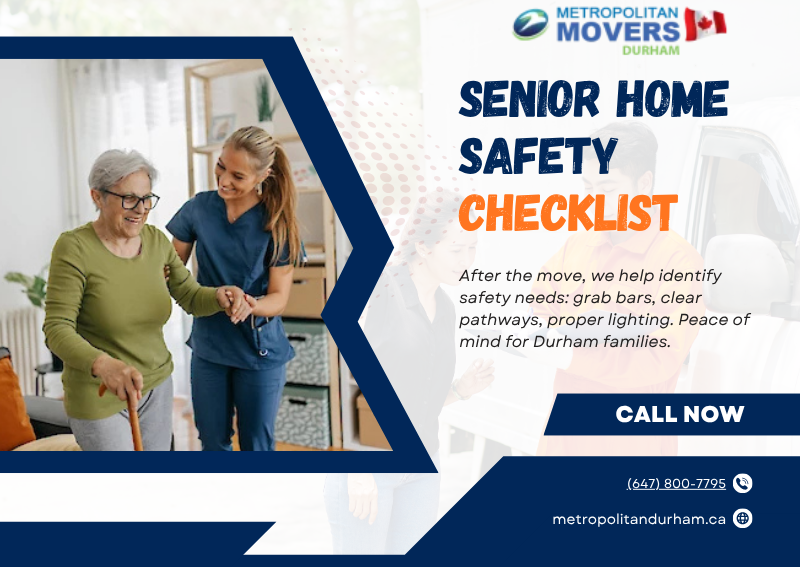
A fall can change everything – a broken hip, a loss of independence, a rapid decline in health, or even an unplanned move to long‑term care. The good news? Most falls are preventable with simple home modifications. A few small changes – a grab bar here, a night light there – can reduce fall risk by half.
After a move to a new residence, it is the perfect time to conduct a safety assessment. Before boxes are even unpacked, you can identify and fix hazards that could cause injury. The space is empty or only partially furnished, making it easy to see problem areas.
Metropolitan Movers offers post‑move safety checks as part of our after‑move support for seniors across Durham Region – from Ajax and Pickering to Whitby, Oshawa, and Clarington. Over eight years, we have helped hundreds of families create safer living environments. This guide walks you through the most important safety considerations – from grab bars to emergency plans. A senior home safety checklist is a gift of peace of mind for everyone who loves the person living in that space.
Fall Prevention – The Big Three
When it comes to preventing falls in a senior’s home, three interventions make the biggest difference. Focus on these first, and you will address the majority of common hazards.
Grab bars – This is critical: towel racks are not grab bars. A towel rack is designed to hold a few pounds of wet fabric. A grab bar must support a person’s full weight and be installed directly into wall studs. Proper grab bars are essential in showers, beside toilets, and along any stairways. If the new home does not have them, hire a handyman who specializes in senior modifications. The cost is modest compared to the cost of a fall. Environmental modifications like grab bars are proven interventions for fall prevention【19†L24-L28】.
Non‑slip mats – Use rubber‑backed mats inside and immediately outside the shower or tub. Remove loose rugs entirely, or secure them with double‑sided tape or a non‑skid underlay. A rug that slides even an inch can send a senior to the floor.
Lighting – Bright, even lighting reduces shadows that can hide tripping hazards. Add night lights in hallways, bathrooms, and the path from the bed to the bathroom. Motion‑sensor lights are ideal – they turn on automatically when the senior gets up at night. Poor lighting is consistently cited as a major environmental risk factor for falls【20†L24-L28】.
Senior fall prevention checklists always start with these three. Get them right, and you have built a strong foundation.
For a complete room‑by‑room walkthrough, see our senior home safety checklist.
Accessibility Modifications – For Walkers and Wheelchairs
If your loved one uses a mobility aid – a cane, a walker, or a wheelchair – the home must accommodate it. Even a few inches of clearance can make the difference between independence and frustration.
Check these four elements carefully.
Doorway width – A standard wheelchair needs at least 32 inches of clear width to pass through a doorway. Measure your doorways. If they are too narrow, you may need to install offset hinges or, in some cases, widen the doorway itself. Creating clear pathways and ensuring adequate doorway width are essential for safe mobility【21†L1-L4】.
Thresholds – The strip at the bottom of a door should be low or ramped, not raised. A threshold that sticks up even half an inch can catch a walker’s wheel or a shuffling foot.
Ramps – If the home has steps at the entrance, a ramp is necessary for wheelchair users and safer for everyone. Portable ramps can be installed temporarily and removed when not needed.
Bathroom access – A walk‑in shower (no step to climb) is ideal. If that is not available, a transfer bench that sits half in and half out of the tub allows the senior to sit and slide across safely.
Metropolitan Movers does not perform construction or installation, but we can recommend trusted contractors in Durham Region who specialize in senior home modifications. We have worked with them for years and know their work is reliable.
A Durham senior safety checklist must include accessibility modifications if mobility aids are part of daily life.
see this guide for after move support seniors.
Furniture Placement for Safety and Mobility
Even a perfectly safe home – with grab bars, good lighting, and wide doorways – can become hazardous if furniture blocks pathways. A senior should never have to squeeze past a dresser or step over a cord.
Use this checklist to evaluate furniture placement.
Walkways – Main pathways through the home should be at least 36 inches wide for a walker or wheelchair user. Move or remove furniture that narrows these paths. Clear pathways reduce tripping hazards and improve navigation【21†L1-L4】.
Cords – No electrical cords should run across walking paths. Use cord covers, tape cords to baseboards, or reposition furniture so outlets are closer. A cord stretched across a hallway is a fall waiting to happen.
Chair height – Chairs should be easy to get out of. The ideal seat height is 18 to 20 inches from the floor. Chairs that are too low make standing difficult; chairs that are too high cause feet to dangle, reducing stability.
Bed access – If possible, position the bed so it is accessible from both sides. This allows the senior to get in and out from whichever side feels easiest. Leave at least 36 inches of clearance on the side they use most.
Frequently used items – Everyday items – a glass of water, medications, the television remote, a phone – should be within easy reach of the bed and the favourite chair. No stretching, no bending to the floor, no climbing onto a step stool.
Senior living safety guides in Durham always emphasize furniture placement. A well‑arranged room is a safe room.
Emergency Preparedness – Alarms, Phones, and Medications
Falls and other emergencies happen despite our best prevention efforts. Being prepared can mean the difference between a quick response and a long, lonely wait for help.
Smoke and carbon monoxide detectors – Test every detector. Replace batteries if you do not know when they were last changed. Detectors should be on every level of the home and inside or just outside each bedroom.
Medical alert system – A wearable button (such as Life Alert or a similar service) provides 24/7 emergency response. The senior can press the button after a fall, even if they cannot reach a phone. Many systems also detect falls automatically.
Phone access – A corded phone (which works during power outages) or a cell phone should be within easy reach of both the bed and the favourite chair. Program emergency numbers into speed dial: family members, the doctor, poison control, and the retirement community’s front desk.
Medication organization – A pillbox with days of the week reduces missed doses and double doses. Also, post a written list of all medications and dosages on the refrigerator – for the senior’s reference and for first responders in an emergency.
Home safety tips for seniors should always include emergency preparedness. Hope for the best, but plan for the worst.
Safety First – Let Metropolitan Movers Help You Assess
A safe home is a happy home. A senior who feels secure in their space is a senior who can relax, enjoy visitors, and maintain independence longer. With Metropolitan Movers’ post‑move safety checklist, you can identify hazards before they cause harm – not after.
We have been helping Durham Region families create safer homes for over eight years. We know what to look for, what questions to ask, and what fixes are worth the investment. Let us put that experience to work for your loved one.
Contact us today for a free, in‑home safety assessment. We will walk through the new space with you, identify risks, and provide a written report of our findings and recommendations. No obligation. No pressure. Just peace of mind.
[Get Your Free Safety Assessment]
FAQs About Senior Home Safety
How often should we reassess home safety?
At least once a year, or whenever there is a change in the senior’s health – after a fall, a new diagnosis, a decline in mobility, or a medication change that affects balance.
Does Metropolitan Movers install grab bars?
We do not perform installation, but we can recommend trusted local handymen who specialize in senior modifications. We have worked with them for years and know their work is reliable and fairly priced.
What if the retirement community does not allow modifications?
Ask about their policy. Many allow grab bars if installed by a professional. Portable solutions – tub transfer benches, removable rails, non‑slip mats – are also excellent options that require no drilling.
Is a home safety assessment covered by insurance?
Some long‑term care insurance policies cover a one‑time safety assessment. Some provincial health programs also offer free home safety checks. Check with your provider. We can provide documentation.
Can you provide a written safety report?
Yes – as part of our after‑move service, we provide a written checklist of findings and recommendations. You will have a clear document to share with family members or contractors.