To effectively how to prepare appliances for moving, you must begin by cleaning, defrosting, and disconnecting all units at least 24 hours before the truck arrives. This process involves draining appliance water lines, securing loose parts, and using professional-grade appliance moving blankets and dollies. Following these steps ensures your heavy investments remain functional and damage-free during your transition across the Durham Region.
Why Proper Appliance Preparation is Critical
Appliances are the heavy hitters of your household, both in terms of weight and cost. Moving a refrigerator or a washing machine isn’t just about heavy lifting; it involves sensitive internal components that can easily break if shifted improperly. In the Durham Region, where local moves can involve varying weather conditions, failing to prepare these machines can lead to leaks, electrical shorts, or permanent mechanical failure.
At Metropolitan Movers, we’ve handled over 500 projects where appliance safety was a top priority. Whether you are moving a high-end kitchen to a new home in Ajax or relocating a breakroom for a business, the preparation phase is non-negotiable. Proper prep doesn’t just protect the machine—it protects your floors and walls from scratches and water damage. Taking the time to do it right saves you the high cost of replacement or repair.
How to Prepare a Refrigerator for Moving
The refrigerator requires the longest lead time for preparation. You cannot simply unplug it and walk away; moisture trapped inside can lead to mold and foul odors within hours of the doors being closed.
- 48 Hours Before: Empty all perishables. We suggest a “moving week” meal plan to use up groceries.
- 24 Hours Before: Perform the unplugging and defrosting timeline; place towels around the base to catch meltwater.
- Cleaning: Use a mild detergent for cleaning appliances before moving to ensure it arrives fresh.
- Securing Parts: Remove glass shelves or tape them down securely so they don’t rattle or shatter.
- External Prep: Secure the power cord to the back of the unit and use securing appliance doors and drums techniques to keep the doors from swinging open.
Once defrosted, leave the doors slightly ajar until the movers arrive to prevent any mildew buildup. At Metropolitan Movers, we use specialized appliance dollies to move fridges upright, as laying them on their side can damage the compressor. Our team in Ajax is trained to navigate these bulky items through tight kitchens without a scratch.
Washing Machine and Dryer Prep Essentials
Moving laundry pairs involves more than just muscle; it requires a moving a washing machine checklist that focuses on internal stability. For washers, the most critical step is installing “shipping bolts.” These bolts lock the drum in place to prevent it from banging against the frame during transit. If you’ve lost yours, most hardware stores in the Durham Region sell universal kits.
Draining appliance water lines is equally important. Even a small amount of leftover water in the pump or hoses can leak onto your other furniture inside the moving truck. Disconnect the hoses and drain them into a bucket, then wrap the ends in small towels. For the dryer, ensure a safe dryer vent hose disconnection and vacuum out any lint buildup to reduce fire risks in your new home. Secure all securing appliance cords and hoses with heavy-duty tape to the back of the machines to prevent tripping hazards.
When how to prepare appliances for moving includes a gas dryer, you must hire a professional to disconnect the gas line. Never attempt to disconnect a gas line yourself, as this is a major safety hazard. Once the gas is safely off and capped, our team can take over the heavy lifting. We use thick moving blankets to wrap these units, ensuring the porcelain or stainless steel finishes remain pristine throughout the journey to your new laundry room.
Moving Stoves, Dishwashers, and Small Units
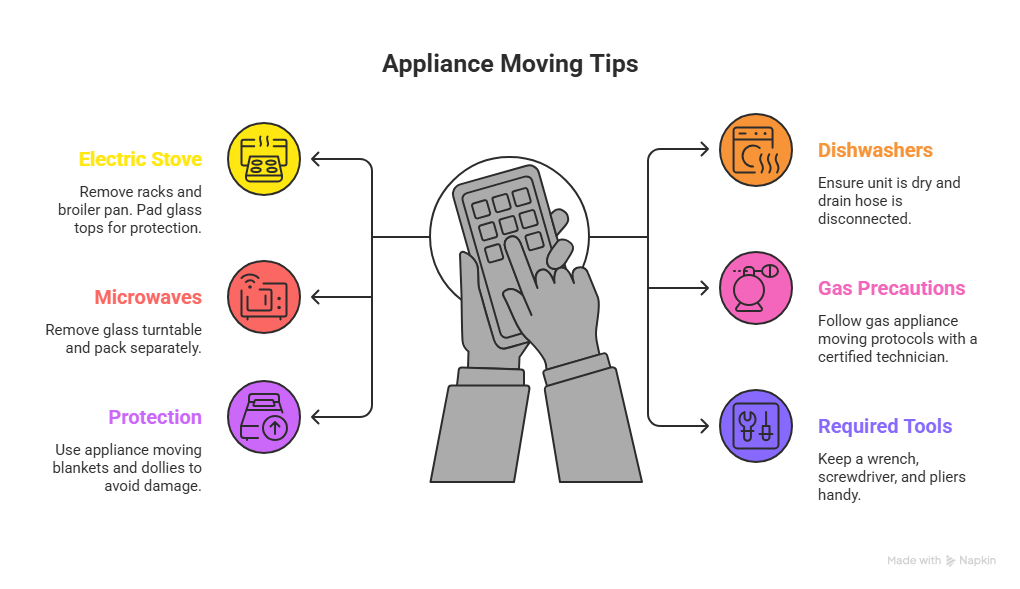
Cooking appliances and dishwashers have their own set of rules. For moving an electric stove safely, you must remove all racks and the broiler pan. If your stove has a glass top, it requires extra layers of padding to prevent cracking under pressure.
- Dishwashers: Ensure the unit is completely dry and the drain hose is disconnected and tucked away.
- Microwaves: Remove the glass turntable and pack it separately in bubble wrap.
- Gas Precautions: Always follow gas appliance moving precaution protocols by using a certified technician for line work.
- Protection: Use appliance moving blankets and dollies to avoid dragging these heavy units across your kitchen tiles.
- Required Tools: Keep a wrench, screwdriver, and pliers handy for the required tools for appliance prep.
At Metropolitan Movers, we often see damage to kitchen floors when homeowners try to slide stoves out themselves. We recommend letting us handle the final extraction. Our team uses floor runners and specialized lifting straps to ensure your Ajax home’s flooring stays as perfect as your appliances.
Preventing Appliance Damage in Transit
The journey in the truck is where vibrations can loosen internal connections. Preventing appliance damage in transit is achieved through strategic loading. We place appliances against the “mother wall” of the truck (the wall closest to the cab) for the most stable ride. We then use heavy-duty straps to lock them into the truck’s tracking system.
If you are moving during an Ontario winter, be mindful of “temperature shock.” When moving appliances from a freezing truck into a warm house, let them sit for a few hours before plugging them in. This allows any condensation to evaporate, protecting the electronic control boards. This professional insight is part of the “Quality Move” promise we provide at Metropolitan Movers.
Setting Up Your New Home: Reinstallation
Once you arrive at your new address, your appliance reinstallation checklist begins. Before plugging anything in, check that the units are level. A washing machine that isn’t level will vibrate violently, potentially damaging your new laundry room. Check all hose connections for leaks after the first few cycles, as seals can sometimes dry out or shift during a move.
- Leveling: Adjust the feet on the bottom of the fridge and stove to ensure stability.
- Cleaning: Give everything one final wipe-down before use.
- Testing: Run a short cycle on the dishwasher and washer to confirm all draining appliance water lines are clear and functional.
At Metropolitan Movers, our service doesn’t just stop at the door. We help place your appliances exactly where they belong. Our 10+ years of experience in the Durham Region means we know the common layouts of homes in Ajax and Whitby, making the move-in process fast and efficient.
Trust the Professionals at Metropolitan Movers
Knowing how to prepare appliances for moving is half the battle; the rest is about expert execution. At Metropolitan Movers, we take the stress out of heavy lifting. Our team is equipped with the best tools and the professional expertise to move your most valuable appliances safely and efficiently across the Durham Region.
Why risk a back injury or a broken fridge with a DIY move? Visit our service page to see how we can customize a moving solution for your home or business. Contact us today for a transparent quote and let us move your appliances with the care and precision they require for a long life in your new home.
FAQs About Appliance Moving
Can I move my refrigerator on its side?
It is highly discouraged. Laying a fridge down can cause oil to flow into the cooling tubes. If you must, it must sit upright for at least 24 hours before being plugged in to allow the oil to settle.
Do I need a plumber to disconnect my washing machine?
While many homeowners can handle basic hose disconnection, if you have old valves or a gas connection, we recommend hiring a professional to avoid leaks or safety issues.
How do I protect my floors when moving a stove?
Never slide it directly on the floor. Use “air sliders,” masonite sheets, or professional moving dollies. Metropolitan Movers uses floor runners to ensure your hardwood and tile stay protected.
Should I leave the doors shut on my fridge during the move?
During transit, they should be taped shut for safety. However, during the preparation phase and once it arrives at the destination (if not plugged in immediately), keep them open to prevent odors.
What are shipping bolts for a washer?
These are long bolts that go into the back of a front-load washer to keep the heavy drum from spinning or bouncing. Using them is the best way to prevent total machine failure during a move.