
Planning a move feels overwhelming when you don’t have a clear system to follow. A structured plan removes stress and helps you stay organized from start to finish. This guide explains how to plan for moving with simple steps anyone can follow. From our experience helping families across Durham, a well-planned move saves time, money, and energy.
Why Planning Early Makes Moving Easier in Durham
Planning early is the foundation of a smooth move. When you start ahead of time, you can break tasks into smaller steps that feel manageable. This approach protects you from last-minute surprises and reduces the risk of overlooked details.
Many homeowners ask how early they should start planning a move. Eight weeks is ideal. It gives you time to declutter, create a packing plan, book movers, and organize your moving budget. We notice that early planners feel more confident, stay organized, and handle moving day with less pressure. Starting now sets your entire move up for success.
Your Week-By-Week Moving Plan: Simple & Easy to Follow
A week-by-week structure helps you plan without guesswork. Here’s a simple framework:
- 8 weeks before: Declutter each room.
- 7 weeks before: Create your moving checklist 2026 edition.
- 6 weeks before: Book professional movers.
- 5 weeks before: Organize paperwork and update addresses.
- 4 weeks before: Begin packing least-used rooms.
- 3 weeks before: Sort items to sell, donate, or toss.
- 2 weeks before: Pack essentials and fragile items.
- 1 week before: Confirm schedules, access, and moving day details.
- Moving week: Final cleaning and last packing stages.
This week-by-week moving plan keeps tasks light and simple. When you follow a steady timeline, the move feels structured instead of rushed.
How to Prepare for a Move Step by Step (Beginner-Friendly Guide)
A step-by-step moving guide helps you stay on track even if you’re moving for the first time. Start with a simple room-by-room plan. Focus on spaces you don’t use often. This creates momentum and keeps your home manageable during the process.
Next, create a packing timeline for moving. Begin with seasonal items, decor, books, and storage areas. Pack daily-use rooms last. A timeline prevents overload and avoids the rushed packing that causes mistakes. From our experience, this method makes packing faster and cleaner.
You should also build a moving budget planner. Track expected expenses such as supplies, mover fees, storage, cleaning, and repairs. A clear budget prevents overspending and helps you make smart decisions. When everything has a place in your plan, your move flows smoothly.
Complete Moving Checklist for 2026: What to Do and When to Do It
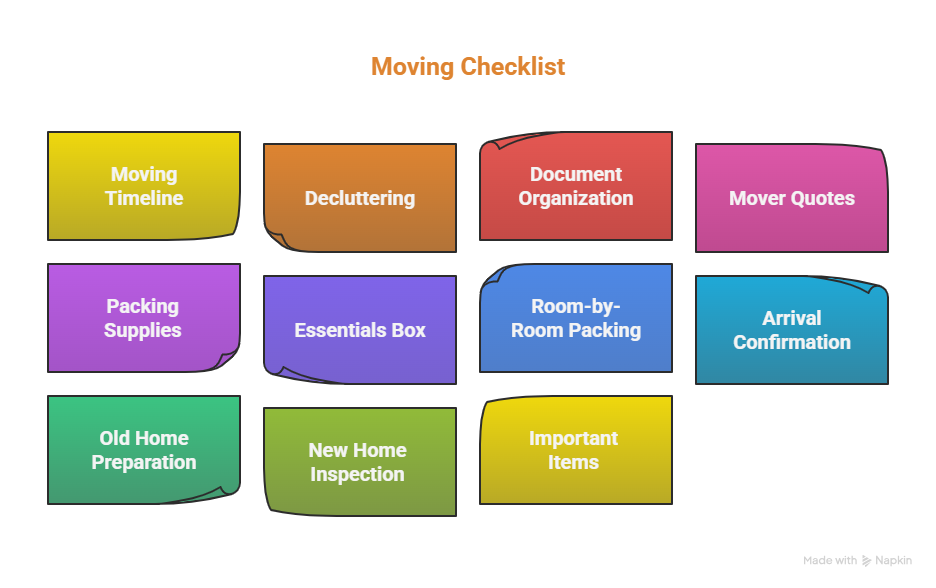
A complete moving checklist gives you structure during busy weeks.
Your 2026 checklist:
- Create a moving timeline checklist
- Declutter before moving
- Organize personal documents
- Compare mover quotes
- Buy or gather packing supplies
- Build a moving essentials box
- Pack room by room
- Confirm mover arrival time
- Prepare the old home for handover
- Inspect the new home before moving day
- Keep important items separate from boxes
A checklist protects you from missed steps. We always suggest homeowners print or save their list somewhere visible. This keeps your planning simple and stress-free.
Smart Packing Tips That Save Time, Money, and Stress
Packing well reduces stress and protects your belongings. Use small boxes for heavy items and large boxes for light ones. This prevents injuries and makes loading easier. Wrap fragile items in towels, linens, or clothing. This reduces costs and waste.
Label each box clearly. Write the room name and the contents. Clear labels help movers work faster and keep unloading organized. In our experience, good labeling prevents confusion and protects fragile items from being misplaced.
How to Budget for a Move (2026 Edition)
Creating a moving budget early prevents unexpected expenses. Start with the basic categories and adjust them based on your home size, distance, and services needed.
Your budget planner should include:
- Moving company fees
- Packing supplies
- Storage costs
- Cleaning services
- Deposit or rental costs
- Fuel and travel expenses
- Insurance or valuation
- Emergency funds
- Packing materials
- Utility setup costs
Having a realistic budget keeps you prepared for every stage. From our experience, homeowners feel more confident when they know what to expect financially. A clear budget also helps you choose the right moving services.
Packing & Decluttering Strategy: What to Keep, Donate, or Toss
Decluttering before moving saves time and reduces the number of boxes you need. Start by sorting items into three categories: keep, donate, and toss. This keeps your home organized and prevents packing items you no longer need.
Good decluttering steps include:
- Donate clothes you haven’t worn in a year
- Recycle old papers or magazines
- Donate duplicate kitchen items
- Toss broken or expired items
- Sell unused furniture
- Gift items you no longer use
Decluttering reduces stress and keeps your move efficient. It creates more space in your new home and helps you start fresh.
Moving Day Checklist for Families: Stay Organized & Avoid Last-Minute Stress
Families need extra steps to stay organized on moving day. Kids, pets, and daily essentials can make the day busier than expected.
Family-friendly checklist:
- Pack a safety kit
- Prepare snacks and drinks
- Assign simple tasks to kids
- Keep toys and comfort items accessible
- Arrange pet care or containment
- Keep chargers, cables, and documents handy
- Confirm access to elevators or parking
- Protect floors and doorways
- Keep valuables separate
This plan helps families move without stress. From our experience, a calm, organized moving day makes the entire move feel easier.
Conclusion
Planning a move becomes easier when you follow a clear, step-by-step structure. Early planning, a solid checklist, and smart packing habits reduce stress and save time. From our experience helping many Durham families, the right plan keeps your move organized and predictable.
If you’re ready for a smoother move, we’re here to help. Visit Metropolitan Durham to explore our moving services and get a quick quote:
👉 https://metropolitandurham.ca
Top 5 FAQs About Planning a Move (2026 Guide)
1. How early should I start planning a move?
Start planning 8 weeks before moving day. This gives you enough time to declutter, pack, and organize your budget.
2. What is the best way to organize a move?
Follow a week-by-week moving plan. Break tasks into small steps and pack room by room.
3. How do I prepare for moving week?
Finish packing, confirm schedules, prepare an essentials box, and clean your old home.
4. What should go in a moving essentials box?
Include toiletries, chargers, tools, basic kitchen items, clothes, and important documents.
5. Should I hire movers early?
Yes. Book movers at least 4–6 weeks before moving day to secure better scheduling and pricing.